


Confidence, Mental Health, and Guarding Your Glow
Confidence doesn’t exist in isolation. It’s closely linked to our mental health, boundaries, and the way we look after ourselves day to day. In this blog, I’m exploring how those pieces fit together and what it really takes to “Guard Your Glow”, protect your confidence when life feels busy, pressured, or overwhelming
This blog is based on an episode of the Confidence Conversations podcast, where I sat down with the brilliant Ali Grady, co-founder of The Thrive Team, and someone I’ve known for around seven years now (which honestly feels both impossible and completely believable at the same time).
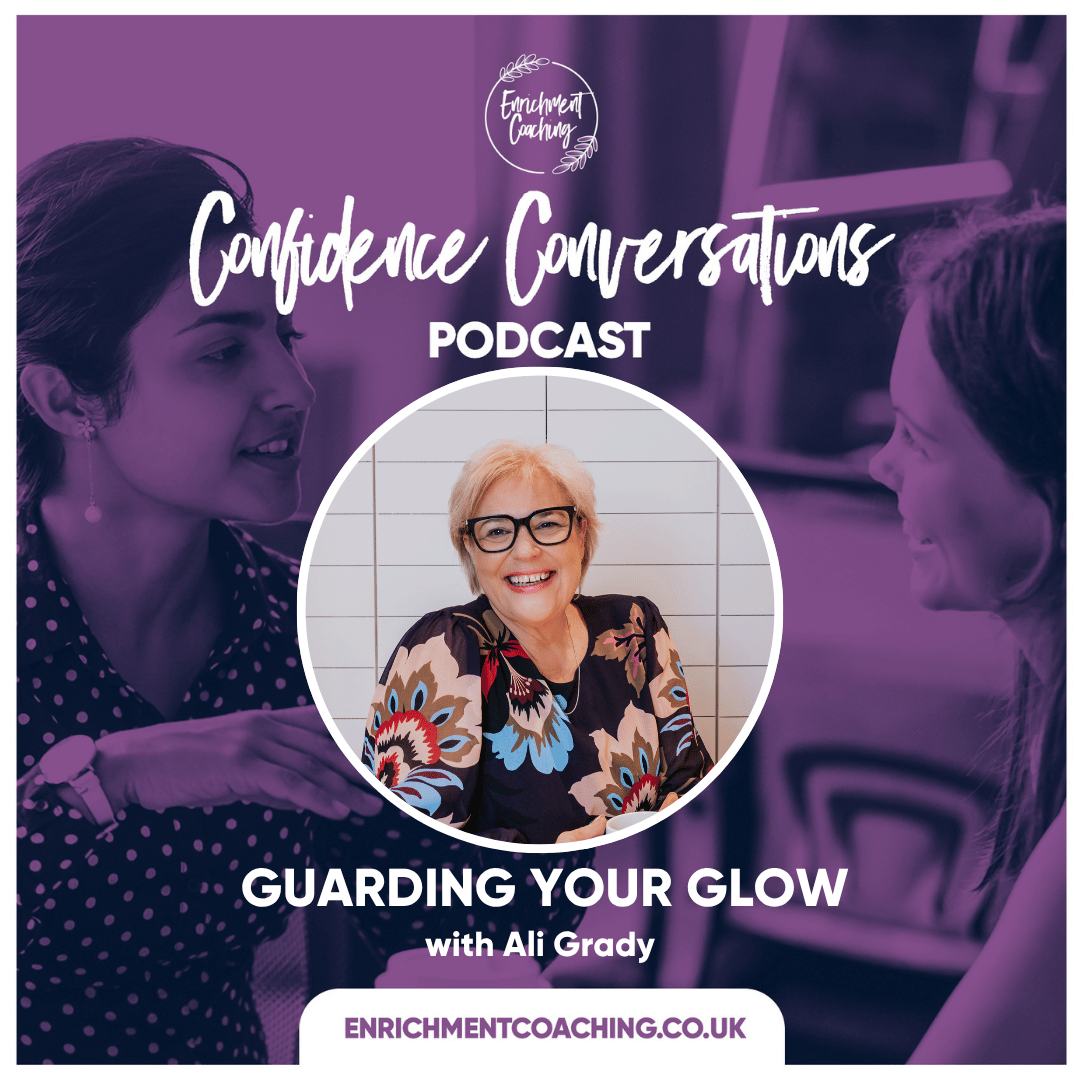
Ali works across talent acquisition, training and coaching, with a big focus on wellbeing at work – mental health, menopause, resilience, leadership, and having those conversations that people often shy away from. And as you’ll read, she brings so much honesty and self-awareness into everything she talks about.
We covered a lot in this conversation confidence, imposter syndrome, anxiety, sleep, crying at work (yes, we went there), and Ali’s brilliant Guard Your Glow framework.
Confidence isn’t always visible from the outside
One of the first things Ali said really stuck with me. She talked about feeling like a bit of a fraud when asked about confidence. Despite holding senior roles and being very capable, confidence hasn’t always been her internal experience.
That’s something I hear frequently in coaching.
From the outside, people look confident. Successful. Put-together. And internally? It’s often a different story.
For Ali, confidence is less about bravado and more about feeling in control. It’s that inner sense of “I’ve got this” especially when she knows her subject or feels genuinely interested and curious. Even when she doesn’t have all the answers, confidence shows up as being okay with that.
And confidence, as we know, is not fixed. It shifts, sometimes even within the same day or from hour to hour.
Someone once said to me that confidence is hard won and easily lost. And I believe that’s so true!
Imposter syndrome, anxiety, and checking your thoughts
We also talked about imposter syndrome and the myths around it. Ali shared how much work she’s done over the years around her thinking, including CBT, and how powerful it’s been to regularly check in with her thoughts.
Questions like:
- What’s the evidence for that?
- When was the last time that actually happened?
- What’s the worst that could happen… and what’s the best?
This idea of thought-checking comes up again and again in confidence work. Our feelings tend to lag behind our actions, which means changing how we think and what we do often comes before we feel confident.
Ali also made a point that really matters here: anxiety doesn’t have to be the enemy.
She describes herself as highly anxious, (which surprises a lot of people), but reframes that anxiety as a kind of superpower. The “what if?” thinking means she plans well, thinks ahead, and has backup options. That anxiety can be useful – if you understand it and work with it rather than fighting it.
Mental health, sleep, and why crying isn’t a problem
For Ali, confidence and mental health are deeply linked. When her wellbeing takes a hit, confidence goes with it.
Sleep, in particular, is non-negotiable.
Without enough sleep, everything feels harder. Thoughts get darker, emotions get closer to the surface, and confidence drains fast. That self-awareness means Ali is fiercely protective of her boundaries now, especially after experiencing depression earlier in her life.
We also talked about crying.
Ali describes herself as a crier, happy, sad, stressed, overwhelmed, all emotions. And rather than seeing that as a weakness, she sees it as release. A way to regulate. A way to reset.
I loved this part of the conversation because so many people carry shame around crying, especially at work. And often the discomfort comes more from other people not knowing what to do, rather than from the person crying.
Crying doesn’t mean you’re not confident. Sometimes it means you’re processing something important.

Guard Your Glow: five practical ways to protect your confidence
Ali shared her G.U.A.R.D. framework, something she originally shaped with women navigating menopause in mind, but which honestly applies to anyone. I heard Ali talk about this at a Women’s Wellness event and knew that I wanted her to come on the podcast to talk about it.
G – Give yourself compassion
We are usually far kinder to everyone else than we are to ourselves.
This is about noticing your inner critic and asking:
- What would my best friend say to me right now?
- If someone I cared about was struggling with this, how would I respond?
Self-compassion is a practice, not a personality trait. And it often starts with awareness.
U – Understand and recognise your boundaries
Boundaries start with noticing:
- What drains you
- What energises you
- When do you feel resentful or overstretched
Ali suggested keeping a simple boundary journal at first, reflecting on what knocked you off balance and why. Boundaries aren’t just about time; they’re about sleep, food, movement, emotional energy, and capacity.
A – Articulate your needs
Having boundaries is one thing. Communicating them is another.
Ali talked about learning to say no, as a people pleaser, this didn’t come naturally. But saying no doesn’t have to mean burning bridges. It can sound like:
- “I’m stretched right now, can we look at another time?”
- “I can’t commit to that but thank you for thinking of me.”
Saying no becomes easier with practice, and confidence often grows in that space.
R – Reaffirm your boundaries
Boundaries aren’t a one-and-done job.
They shift. They slip. They need maintenance.
Ali describes boundaries like a garden fence, if you don’t look after them, they weaken. Reaffirming boundaries might mean reminding yourself (or others) what still matters, or adjusting them when life changes.
Sometimes this is as simple as deciding an email can wait until tomorrow so your sleep doesn’t suffer.
D – Develop routines to protect your energy
Self-care isn’t a luxury, it’s part of how confidence is sustained.
Ali shared small, realistic routines:
- Starting the day with hot water, lemon and ginger
- Practising daily gratitude
- Habit-stacking (adding small habits onto things you already do)
The key is starting small. Five minutes beats an over-ambitious plan that never happens.
Confidence lives in ordinary moments
One of my favourite parts of the conversation was when Ali talked about the last time she felt confident, on a client call, asking good questions, knowing her subject.
Not a big stage. Not a dramatic moment.
Just competence, curiosity, and experience.
And that’s worth remembering.
Confidence doesn’t always announce itself loudly. Sometimes it shows up quietly in everyday moments we forget to notice.
If there’s one takeaway from this conversation, it’s that confidence isn’t about fixing yourself. It’s about protecting your energy, understanding yourself better, and being a little kinder along the way.
And guarding your glow? That’s not just good for you, it benefits everyone around you too.
If you try any part of Guard Your Glow, I’d genuinely love to know what works for you.
Watch the full episode of the Confidence Conversations Podcast with Ali below:
Finally, don’t forget you can sign up for my monthly top tips on confidence building join The BIG PANTS Update HERE!