


Do You Really Have Imposter Syndrome… Or Is It Just Self-Doubt?
If you’ve ever wondered whether you have imposter syndrome, you’re not alone.
Impostor syndrome is the feeling that you’re not as capable or competent as others think you are—and that one day you’ll be “found out” as a fraud, despite evidence of your success.
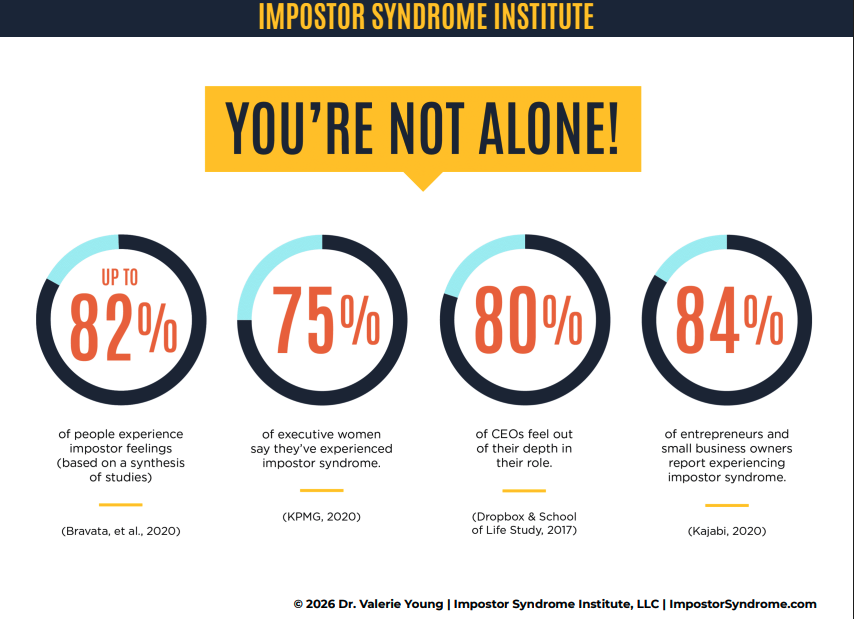
While imposter syndrome is a term we hear everywhere. On podcasts. On LinkedIn. On TV. In interviews. In meetings. In coaching conversations. But often what people are actually experiencing is self-doubt.
And while they can feel similar, imposter syndrome and self-doubt are not the same thing. Understanding the difference is key, because that feeling of being “found out” as a fraud runs much deeper than everyday nerves.
And the more I hear people saying they have it, the more I find myself asking:
Do we really mean imposter syndrome… or are we actually talking about self-doubt?
Because the difference matters. A lot.
And, before we go on, I think it’s important to take a moment to talk about the language surrounding imposter syndrome.
Imposter syndrome obviously isn’t a formal clinical diagnosis, and whilst it started out as imposter phenomenon, imposter syndrome is the term that’s been widely adopted through research and everyday conversation. And while the language has been widely debated, the experience behind it is very real, and from a coaching perspective, it’s something we can explore, reframe, and learn to manage.
Imposter Syndrome and Self-doubt are not the same thing
I think there’s a really fine line between imposter syndrome and self-doubt, but they are fundamentally different experiences.
Self-doubt sounds like:
- “I’m a bit nervous about this”
- “I hope I do a good job”
- “I need to double check I’ve got this right”
You still go ahead. You still do the thing.
In fact, a little bit of self-doubt can help you not to be too arrogant, it can often ground you, helping you prepare, check your thinking, and show up well with more confident and less arrogance.
Imposter syndrome feels very different.
It’s not just nerves. It’s the belief that:
- “I don’t belong here”
- “Someone’s going to find me out”
- “I’m a fraud”
And that’s a completely different level of thinking. Because when you genuinely feel like that, you don’t just feel uncomfortable.
You hold yourself back.
The biggest myth I see
One of the reasons I wanted to talk about this topic is because it’s become a bit… trendy. Everyone says they have it, claim to have it or have experienced it.
People will say something like: “My imposter syndrome was really strong today”
And I often find myself wondering, really was it?
Or was it actually a moment of self-doubt?
Because, if you’re still stepping forward, speaking up, delivering the presentation, putting yourself out there…
that’s much more likely to be self-doubt.
Imposter syndrome tends to stop you before you even begin.
What imposter syndrome can actually look like
From a coaching perspective, I don’t just listen for what people say, I look at patterns in behaviour.
Some of the most common things I see are:
- Procrastination (if I don’t start, I can’t fail)
- Over-preparing or overworking (to avoid being “caught out”)
- Avoiding opportunities altogether (even job hopping to avoid being found out)
- Keeping a low profile
- Self-sabotaging at key moments
You might have read that list and be thinking oh well I do all of that, and of course lots of us do, BUT these common activities for someone with imposter syndrome run deeper than a one-off situation.
It becomes a pattern.
It’s about perception, not competence
This is the part I think people often miss.
People with imposter syndrome are not lacking ability.
In fact, very often they are:
- Highly capable
- Extremely well qualified
- Experienced
But their perception of their own competence doesn’t match reality. So even when all the evidence says, you belong here…
They still feel like they don’t.
What doesn’t help (but gets said anyway)
Let’s talk about one phrase I’m really not a fan of in any context but especially in the imposter syndrome context:
“Fake it till you make it.”
If someone already feels like a fraud, telling them to “fake it” only reinforces that belief.
It doesn’t build confidence, it deepens the doubt and probably proves to them that they are right about how they see themselves, as a fraud, a fake!
What does help
A much more helpful reframe, and one I use a lot is:
“Act as if.”
It’s subtle, but powerful, because it helps you focus on your actions,
You can:
- Speak up as if you belong in the room
- Answer questions as if you trust your knowledge
- Show up as if you are confident
Your feelings might lag behind and that’s okay, because the more you act as if, the more you’ll believe it. Your feelings will be the last thing to change, but they will, and they usually do.
You don’t need to get rid of it
Another important point: imposter syndrome isn’t something you just “fix” and it disappears overnight.
It’s something you learn to manage.
And that starts with:
- Recognising what’s really going on
- Normalising the experience (you’re not alone)
- Reframing your thinking
- Taking action anyway
A question to leave you with
If you’ve ever said:
“I’ve got imposter syndrome”
Pause for a moment and ask yourself:
- Am I actually avoiding something because I feel like a fraud…
OR
- Am I just feeling nervous and doing it anyway?
Because if it’s the second one…
That’s not imposter syndrome.
And understanding the difference is what changes things.
Watch the podcast episode on Imposter Syndrome where the hosting tables are turned and I’m the guest.
So, what can I do?
If you feel like you have Imposter Syndrome, a great place to start is to educate yourself on the topic and I don’t mean from that influencer on social media, or that famous person who claims they have it.
Find a reputable source such as, www.impostersyndrome.com where Dr Valerie Young has 40 years of research on the topic that started with Clance & Imes back in the 1970’s https://paulineroseclance.com/impostor_phenomenon.html learn about it and that’s your first step, understand that you’re not alone and support is out there for you.
Keep in touch with my thoughts on Confidence Building and it’s related topics by joining my monthly newsletter www.bigpantsupdate.co.uk